Τετάρτη 30 Σεπτεμβρίου 2015

Γιατί είναι θρεπτικό για την επιδερμίδα το μπάνιο της Κλεοπάτρας

  Στo μπάνιο που έκανε η Κλεοπάτρα κάθε μέρα μέσα σε γάλα γαϊδούρας με μέλι κρύβεται η επιτυχία της όμορφης επιδερμίδας της . Το γάλα περιέχει γαλακτικό οξύ,που έχει απολεπιστικές ιδιότητες για το δέρμα,καθώς και πλήθος ενζύμων,αμινοξέων και αντιοξειδωτικών,που ενυδατώνουν και τονώνουν την επιδερμίδα.Παράλληλα,περιέχει πρωτεΐνες,άρα θρέφει και ενυδατώνει το ξηρό δέρμα. Το μέλι έχει αντιφλεγμονώδεις ιδιότητες και βοηθά στη γρήγορη επούλωση των πληγών.Περιέχει μέταλλα και ιχνοστοιχεία,ενώ παράλληλα είναι παχύρρευστο και βοηθά να συντηρηθεί η υγρασία και να εισχωρήσει βαθύτερα στους πόρους.Άρα βελτιώνει την υφή της επιδερμίδας,βοηθά την ανανέωση των κυττάρων,ενισχύει την παραγωγή κολλαγόνου. Πριν πάρει το μπάνιο της η Κλεοπάτρα, άλειφε το σώμα της με μέλι, ενώ μετά χρησιμοποιούσε ελαιόλαδο εμπλουτισμένο με αιθέρια έλαια μύρου και λιβάνου για να το ενυδατώσει.


Πηγή http://www.life2day.gr/2012/06/%CE%B3%CE%B9%CE%B1%CF%84%CE%AF-%CE%B5%CE%AF%CE%BD%CE%B1%CE%B9-%CE%B8%CF%81%CE%B5%CF%80%CF%84%CE%B9%CE%BA%CF%8C-%CE%B3%CE%B9%CE%B1-%CF%84%CE%B7%CE%BD-%CE%B5%CF%80%CE%B9%CE%B4%CE%B5%CF%81%CE%BC%CE%AF/

Ελιξήριο ζωής, υγείας και ομορφιάς !

Το γαϊδουρίσιο γάλα είναι πράγματι από τα μεγαλύτερα θαύματα της φύσης που μπορεί να προσαρμοστεί τέλεια στον ανθρώπινο οργανισμό. Είναι το πιο κοντινό στο ανθρώπινο μητρικό γάλα και γι' αυτό προτείνεται σε άρρωστα παιδιά και ανθρώπους με αδύναμο ανοσοποιητικό σύστημα. Έχει θεραπευτικές ιδιότητες για πολλές αρρώστιες,  κυρίως δερματικές. Για να παραχθεί ένα κιλό τυρί από γαϊδουρίσιο γάλα χρειάζονται 25 λίτρα. Αυτό γιατί τα λιπαρά του είναι πολύ λίγα. Βοηθάει στην ανάπλαση του δέρματος και γενικά όλων των οργάνων. Χρησιμοποιούνταν πολύ στα παλαιότερα χρόνια και ιδίως στην αρχαιότητα. Κλασσικό παράδειγμα η Κλεοπάτρα της Αιγύπτου.  Παρακαλούμε πολύ να σχολιάσετε και να καταθέσετε  όποια εμπειρία ή επαφή έχετε με προϊόντα όνου, ώστε να γίνουν περισσότερο γνωστά τα οφέλη στον ευρύ κοινό.Ποιος είναι ο αριθμός των γαϊδουριών που ακολουθούσαν την Κλεοπάτρα όπου και να βρισκόταν, ώστε να κάνει καθημερινά μπάνιο στο γάλα τους  για την υγεία της;               


Τρίτη 22 Σεπτεμβρίου 2015

Γάλα γαϊδούρας για ομορφιά και υγεία!

Γάλα γαϊδούρας για ομορφιά και υγεία
Ιδιαίτερα ευεργετικές ιδιότητες έχει το γάλα του γαϊδουριού, που θεωρείται διατροφικά μακράν καλύτερο από το αγελαδινό και πιο κοντινό στο μητρικό, καθώς είναι σχετικά φτωχό σε ολικά στερεά και πρωτεΐνες και έχει υψηλή περιεκτικότητα σε λακτόζη. Σύμφωνα με έρευνες, το γάλα της γαϊδούρας έχει ιδιότητες αντιγήρανσης και αναγεννητικά συστατικά και προλαμβάνει ορισμένες ασθένειες του δέρματος. Ακόμα, περιέχει απαραίτητα λιπαρά οξέα που βοηθούν στην απορρόφηση των βιταμινών, ενώ ακόμα βελτιώνει και τη διαδικασία της επούλωσης. Τα μεταλλικά άλατα του γαϊδουρινού γάλακτος επιτρέπουν στο δέρμα να καθαρίζεται, εφόσον αφαιρούνται τα νεκρά κύτταρα του δέρματος με στόχο τη δημιουργία νέων ζωντανών κυττάρων. Το αυξανόμενο ενδιαφέρον για το γάλα του γαϊδουριού, τόσο σε επίπεδο παραγωγής, όσο και σε επιστημονικό επίπεδο, πρόκειται να συζητηθεί -μεταξύ άλλων θεμάτων- στο 2ο Πανελλήνιο Συνέδριο Κτηνιατρικής Παραγωγικών Ζώων, Υγιεινής και Ασφάλειας Τροφίμων Ζωικής Προέλευσης και Προστασίας του Καταναλωτή, που ξεκινά σήμερα στη Θεσσαλονίκη και οργανώνεται από την Ελληνική Κτηνιατρική Εταιρεία. Στο συνέδριο, θα παρουσιαστούν για πρώτη φορά σε εθνικό επίπεδο τα αποτελέσματα μακροχρόνιας έρευνας σχετικά με την εκτροφή και την υγεία των όνων στην Ελλάδα. Η ερευνητική ομάδα της Κτηνιατρικής Σχολής Θεσσαλονίκης, με συντονιστή τον αναπληρωτή καθηγητή Γεώργιο Αρσένο ασχολείται με τους όνους τα τελευταία 10 χρόνια με στόχο την ανάδειξη των δυνατοτήτων της ονοτροφίας, αλλά και την υποστήριξη των γαϊδουριών στον αγώνα τους για επιβίωση αφού «αποτελούν τα απομεινάρια ενός πολιτισμού που χάνεται». Ιδιαίτερη σημασία έχει το γεγονός ότι ο πληθυσμός των ελληνικών όνων είναι πλέον κάτω από τις 13.000, όταν μόλις δεκαπέντε χρόνια πριν ήταν 95.000.
galagaidouras00
Επίσης είναι αδιευκρίνιστο σε ποιες φυλές ανήκουν τα εναπομείναντα ζώα, ενώ καμία από τις εγχώριες φυλές όνων δεν περιλαμβάνεται στον κατάλογο απειλούμενων φυλών του Οργανισμού Τροφίμων και Γεωργίας (F.A.O), ο οποίος αποτελεί την παγκόσμια βάση αναφοράς. Πέρα από την διατήρηση της βιοποικιλότητας και γενετικής ποικιλότητας των αυτοχθόνων φυλών γαιδάρων, που εκτρέφονται στην Ελλάδα, η έρευνα έρχεται να καλύψει και το ιδιαίτερο ενδιαφέρον για το γαϊδουρινό γάλα σε επίπεδο παραγωγής αλλά και σε επιστημονικό επίπεδο.
Με δεδομένη την ευρωπαϊκή εμπειρία, όπου το γαϊδουρινό γάλα χρησιμοποιείται κυρίως για την παραγωγή καλλυντικών, αλλά και για ανθρώπινη κατανάλωση, στην έρευνα παρουσιάζονται στοιχεία από την ελληνική πραγματικότητα των υφιστάμενων μονάδων παραγωγής γαϊδουρινού γάλακτος και αναλύονται οι προοπτικές αυτής της καινοτόμου δραστηριότητας. Είναι γεγονός ότι στη διαθέσιμη επιστημονική βιβλιογραφία παρατηρείται μια έντονη ερευνητική δραστηριότητα με αντικείμενο το γαϊδουρινό γάλα. Μόνο την τελευταία πενταετία έχουν δημοσιευτεί 60 περίπου επιστημονικές εργασίες αποκλειστικά για το γαϊδουρινό γάλα. Οι εργασίες αυτές υποδηλώνουν, ότι μπορεί να χρησιμοποιηθεί ως εναλλακτική λύση για τα βρέφη που παρουσιάζουν δυσανεξία στο αγελαδινό γάλα και σε επιλεγμένες περιπτώσεις αλλεργίας, αλλά και ως προληπτικό μέτρο για μια σειρά από παθήσεις ενηλίκων ατόμων. 
gala sti mpaniera
To γάλα γαϊδάρας στην ομορφιά
Η εξαιρετική ποιότητα του γάλακτος βοηθάει στην υγεία και την αναζωογόνηση. Το γάλα του -ήταν διάσημα τα λουτρά της βασίλισσας Κλεοπάτρας, η οποία συνήθιζε να ταξιδεύει με τα εκατοντάδες γαϊδούρια της, με σκοπό να γεμίζει τις βασιλικές σκάφες λουτρών με γάλα γαϊδουριού- περιέχει μεγάλες ποσότητες θρεπτικών ουσιών, βιταμινών και άλλων συστατικών που ωφελούν την υγεία μας και το δέρμα. Ερευνες έχουν δείξει ότι είναι καλύτερο ποιοτικά από το αγελαδινό και το πλησιέστερο στο μητρικό γάλα.
Στην αρχαία Αίγυπτο,το χρησιμοποιούσαν σε διάφορες ιατρικές συνταγές για την ίαση εσωτερικών και εξωτερικών φλεγμονών. Στην αρχαία Ρώμη, ήταν το ποτό της αριστοκρατίας.Οι γυναίκες είχαν ερωτευτεί τις καλλυντικές του ιδιότητες και έκαναν μπάνιο μέσα σ αυτό, όπως επίσης έφτιαχναν κρέμες προσώπου.Όλες γνωρίζουμε ότι η Κλεοπάτρα έκανε μπάνιο σε γάλα γαϊδούρας για να διατηρήσει νεανική και λαμπερή την επιδερμίδα της… και το πέτυχε.
  • Έχει οξέα που προσφέρουν ελαστικότητα στο δέρμα. Περιέχει και λιπαρά όξεα όπως Ω3 ΚΑΙ Ω6, που βοηθούν στην απορρόφηση των βιταμινών. Τα μεταλλικά του στοιχεία επιτρέπουν στο δέρμα να καθαρίζεται, αφαιρούνται τα νεκρά κύτταρα και δημιουργούνται νέα, ζωντανά.
  • Παλιότερα, όλα τα καλλυντικά σκευάσματα που ήταν για ανάπλαση, είχαν κολλαγόνο και ελαστίνες, δίνοντας ένα αποτέλεσμα μόνο 10%-15%. Σήμερα, χρησιμοποιώντας το γάλα της γαϊδούρας στις κρέμες προσώπου, έχουμε αποτέλεσμα 50% σε ανάπλαση, δηλαδή σε αναζωογόνηση του δέρματος, σε επούλωση πληγών, σε ενυδάτωση από ψυχογενείς αφυδατώσεις!
Μια κρέμα προσώπου από αυτό το γάλα, είναι αναπλαστική,αντιρυτιδική, συσφικτική, αντιγηραντική και ενυδατική.

Ευεργετικό το γαϊδουρίσιο γάλα!!

Οι αρχαίοι Έλληνες το θεωρούσαν μία άριστη θεραπεία για διάφορες ασθένειες, οι Ρωμαίοι το εξυμνούσαν ως ένα ποτό πολυτελείας. Η ιστορία, λέει, ότι η βασίλισσα Κλεοπάτρα, η σύζυγος του Ρωμαίου αυτοκράτορα Νέρωνα καθώς και η...αδελφή του Ναπολέοντα, χρησιμοποιούσαν το γάλα γαϊδάρου για τα καλλυντικά τους. Η πλούσια σύνθεση του γάλακτος το καθιστούν εξαιρετικό για την αντιγήρανση, τη θεραπεία των ρυτίδων καθώς και για την αναδιάρθρωση και αναγέννηση του προσώπου με εξαιρετικά αποτελέσματα. Έχει τρομερά οφέλη στη θεραπεία για το ξηρό δέρμα, τα εκζέματα, την ακμή αλλά και την ψωρίαση.

Είναι πολύ θρεπτικό, θεωρείται ότι είναι το πιο κοντινό γάλα στο μητρικό γάλα του ανθρώπου. Επίσης, είναι πολύ πιο εύπεπτο από όλα τα είδη γάλακτος. Μία πλούσια ποικιλία βιταμινών το καθιστούν ελκυστικό τόσο για την κατανάλωση όσο και για την περιποίηση της επιδερμίδας. Σύμφωνα με εκτιμήσεις το γάλα όνου έχει ιδιαίτερα υψηλή τιμή που ανά λίτρο μπορεί να ανέρχεται από 50 έως 100 ευρώ. 

Αναλύσεις δείχνουν την παρουσία σε αρκετά μεγάλες ποσότητες βιταμινών Α1, Β1, Β2, C και Ε καθώς και ένα εξαιρετικό ποσοστό ανοσοσφαιρήνης, μαγνήσιο, ασβέστιο, κάλιο, φώσφορο, ψευδάργυρο και νάτριο. Οι πρωτεΐνες γάλακτος προσφέρουν αξιόλογες ενυδατικές και θρεπτικές ιδιότητες.

Η ενυδατική τους ικανότητα είναι αποτέλεσμα της εξαιρετικής απορρόφησής τους από την επιδερμίδα, καθώς και της δυνατότητας τους να δεσμεύουν νερό. Δεν είναι διόλου τυχαίο το γεγονός ότι η Κλεοπάτρα, έκανε μπάνιο καθημερινά μέσα σε γάλα γαϊδούρας, προκειμένου να χαρίζει στο δέρμα της λάμψη και νεότητα.

Παράλληλα αποτοξινώνει το συκώτι αποφέροντας άμεση ανανέωση των κυττάρων του δέρματος. Ρυθμίζει τη μικροπανίδα του εντέρου χάρις τη δράση της λυσοζύμης και της λακτόζης και προλαμβάνει καρδιαγγειακές παθήσεις.

Ρυθμίζει τη φυσιολογική μεταβολική δραστηριότητα των κυττάρων, διορθώνει τη θαμπάδα και αναζωογονεί τις γραμμές έκφρασης του προσώπου. Βοηθά στην αντιμετώπιση δερματικών παθήσεων όπως έκζεμα και ψωρίαση και αποτελεί τον καλύτερο σύμμαχο στην καταπολέμηση της οστεοπόρωσης.


Πηγή: http://www.gatzoli.gr/2013/09/blog-post_1770.html#ixzz3mVk4Gtra

Donkey milk: Ancient elixir of life experiences modern-day resurgence

Donkey milk: Ancient elixir of life experiences modern-day resurgence

Donkey milk was hailed by the ancients as an elixir of long life, a cure-all for a variety of ailments, and a powerful tonic capable of rejuvenating the skin. Cleopatra, Queen of Ancient Egypt, reportedly bathed in donkey milk every day to preserve her beauty and youthful looks, while ancient Greek physician Hippocrates wrote of its incredible medicinal properties. Now it seems that interest in donkey milk is experiencing a renewed interest after Pope Francis reported thriving on it as a baby, and remarkable results are being reported in people with psoriasis, eczema, and asthma.

Donkey milk preserves beauty and youth?

Legend has it that Cleopatra (60 – 39 BC), the last active Pharaoh of Egypt, insisted on a daily bath in the milk of a donkey (ass) to preserve the beauty and youth of her skin and that 700 asses were need to provide the quantity needed. It was believed that donkey milk renders the skin more delicate, preserves its whiteness, and erases facial wrinkles. 
According to ancient historian Pliny the Elder, Poppaea Sabina (30 – 65 AD), the wife of Roman Emperor Nero, was also an advocate of ass milk and would have whole troops of donkeys accompany her on journeys so that she too could bathe in the milk.  Napoleon’s sister, Pauline Bonaparte (1780–1825 AD), was also reported to have used ass milk for her skin’s health care.
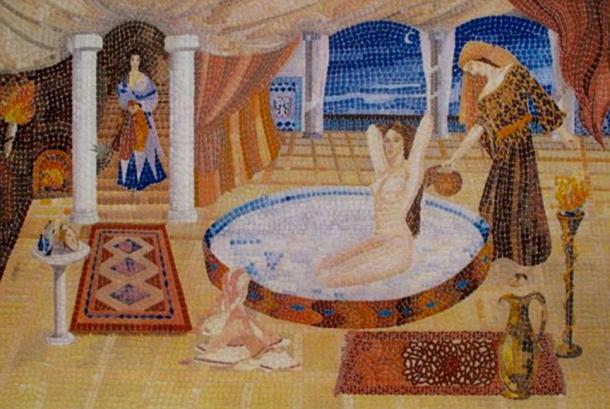
'Cleopatra’s Milk Bath', contemporary mosaic
'Cleopatra’s Milk Bath', contemporary mosaic by Irel.

Donkey milk as a cure-all

Greek physician Hippocrates (460 – 370 BC) was the first to write of the medicinal virtues of donkey milk, and prescribed it as a cure a diverse range of ailments, including liver problems, infectious diseases, fevers, nose bleeds, poisoning, joint pains, and wounds.
Roman historian Pliny the Elder (23 – 79 AD) also wrote extensively about its health benefits. In his encyclopedic work Naturalis Historia, volume 28, dealing with remedies derived from animals, Pliny added fatigue, eye stains, weakened teeth, face wrinkles, ulcerations, asthma and certain gynecological troubles to the list of afflictions it could treat:
Asses' milk, in cases where gypsum, white-lead, sulphur, or quick-silver, have been taken internally. This last is good too for constipation attendant upon fever, and is remarkably useful as a gargle for ulcerations of the throat. It is taken, also, internally, by patients suffering from atrophy, for the purpose of recruiting their exhausted strength; as also in cases of fever unattended with head-ache. The ancients held it as one of their grand secrets, to administer to children, before taking food, a semisextarius of asses' milk.
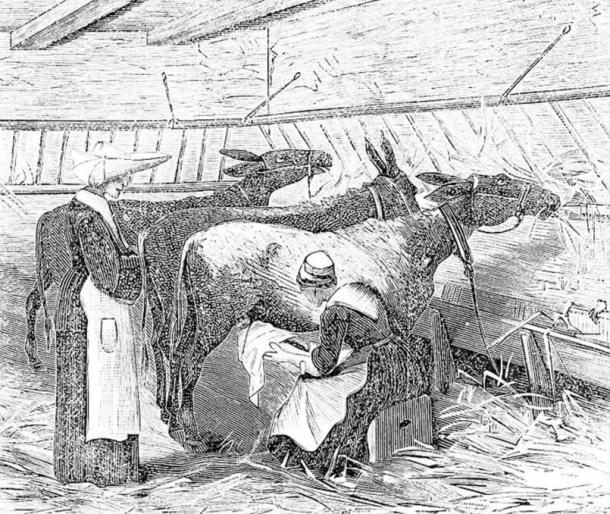
Over the centuries, donkey’s milk continued to be recognized for its medicinal properties. In the 1800s, donkeys were used at a hospital for assisted children in Paris to aid in the recovery of children with congenital or contagious diseases.  The Popular Science Monthly, Volume 22, writes:
The infants were at first fed with goat's milk, but it was soon found that ass's milk was better for them; and they are now all fed with milk which they draw directly from the teat of the animal. One, two, and sometimes three children are presented to the ass at the same time, being held at the teat in the arms of the nurse, and the operation is performed with wonderful ease. Numbers speak most eloquently of the success of the method. During six months, eighty-six children afflicted with congenital and contagious diseases were fed at the nursery. The first six were fed, by stress of particular circumstances, with cow's milk from the bottle; only one of them recovered. Forty-two were nursed at the teat of the goat; eight recovered, thirty-four died. Thirty-eight were nursed at the teat of the ass; twenty-eight recovered, ten died. In the face of such results there can be hardly any hesitation in declaring that in hospitals, at least, the best method of feeding new-born children, who cannot, for any reason, be confided to a nurse, is to put them to suck directly from the teat of an ass.
Nurse holding a baby to suckle directly from a donkey at the hospital for assisted children in Paris
Nurse holding a baby to suckle directly from a donkey at the hospital for assisted children in Paris, 1882-1883. (Wikimedia Commons)

Properties of Donkey milk

According to The Telegraph, the UN’s Food and Agriculture Organisation acknowledges that donkey milk has “particular nutritional benefits”, with a protein profile that may make it more suitable for those allergic to cow’s milk.
Donkey milk is the closest known milk to human breast milk with high lactose ratios and low fat content. It is also rich in vitamins, contains anti-bacterial agents, reported to be 200 times more active than in cow’s milk, and anti-allergens, which are believed to be responsible for alleviating psoriasis, eczema, asthma, and bronchitis, according to a new report in the MailOnline.
“Like humans, donkeys have a single stomach,” writes the MailOnline. “Yet we mostly drink the milk of multi-stomached animals such as cows and goats, which use a lot of bacteria to digest their food through a complicated fermentation process.”
Donkey milk is still used throughout the world for its many health benefits
Donkey milk is still used throughout the world for its many health benefits. Source: BigStockPhoto
With all these benefits, one may wonder why it is not more readily available. The answer lies in its production. A female donkey produces an average of 0.3 litres of milk a day (maximum 1 litre) for only half of the year, while cows are forced to deliver 30 times as much throughout the year. Furthermore, a donkey “won’t produce milk unless it’s stimulated by the presence of its foal, and milking has to be done manually,” writes the MailOnline.
As a result, the milk sells for an extremely high price, €24 (approx. $30) a litre in Cyprus, and in other European countries the price is even double. Nevertheless, donkey milk remains fairly popular in South America, where it can be readily found at street markets.
AP reports that fresh donkey milk is sold on the streets of Chile.
“Ricardo Alegria is a different sort of milk man,” writes AP. “For a quarter century or more, he and his brother Marco have led donkeys through the streets of Chile's capital, milking them on the spot for customers.”  Ricardo Alegria said the milk taken as a “vitamin jolt” for babies with stomach problems, but that adults often drink it too.
While many may be put off by the price of this precious milk, a donkey seller from Golden Donkeys Farm in the village of Skarinou, Cyprus, told MailOnline that 60ml a day is “all you need to protect your body”.
Featured image: Donkey foal drinking milk from its mother. Source: BigStockPhoto


Read more: http://www.ancient-origins.net/news-general/donkey-milk-ancient-elixir-life-experiences-modern-day-resurgence-002502#ixzz3mVimjNXJ

Donkey milk (From Wikipedia, the free encyclopedia)

Donkey milk

From Wikipedia, the free encyclopedia

Donkey milk (or Ass milk) is the milk given by the domesticated ass or donkey. It has been used since Egyptian antiquity for both alimentary and cosmetic reasons.


General points[edit]

A female ass gives between 0.2 to 0.3 litres of milk a day.[citation needed] The milk of a donkey was disapproved[clarification needed] by the U.S.D.A until 2001. A donkey dairy farm may range from a few to over 600 animals.[1]

Composition[edit]

Donkey milk, along with mare’s milk, is the closest to breast milk,[2] with notably low lipid ratios and high lactose ratios.[3]

Composition of donkey’s, mare’s, human and cow’s milk (g/100 g)[3]
compositiondonkeymarehumancow
pH7.0 – 7.27.187.0 – 7.56.6 – 6.8
Protein g/100g1.5 – 1.81.5 – 2.80.9 – 1.73.1 – 3.8
Fat g/100g0.3 – 1.80.5 – 2.03.5 – 4.03.5 – 3.9
Lactose g/100g5.8 – 7.45.8 – 7.06.3 – 7.04.4 – 4.9
Total Solids (TS) g/100 g8.8-11.79.3-11.611.7-12.912.5-13.0
Casein Nitrogen (CN) g/100 g0.64-1.030.94-1.20.32-0.422.46-2.80
Whey protein g/100 g0.49-0.800.74-0.910.68-0.830.55-0.70
NPN g/100 g0.18-0.410.17-0.350.26-0.320.1-0.19
Casein Nitrogen (CN) %47.285026.0677.23
Whey protein %36.9638.7953.5217.54
NPN %15.7611.2120.425.23
Donkey milk is similar to mare milk and human breast milk in that it is relatively poor in protein and fat but rich in lactose. The casein to whey protein ratio is intermediate between human breast milk and cow milk. Gross composition of milk differs by the mother's lactation stage, with ash and protein content showing a declining trend, but pH, percentage of whey protein, and amino acid content remaining the same.[4]

Alimentary use[edit]

Donkey milk is considered to be the closest to woman’s milk.[5][2] It is very nourishing because it contains more lactose and less fat than cow’s milk.[5] It was used until the beginning of the twentieth century as a substitute tobreast milk.[6] The 1928 testimony of Dr. Charles Porcher (1872-1933) of the Lyon National Veterinary Institution showed that the practice was still used, to a lesser extent, in the interwar years:
It seems that we are getting back to ass milk to raise children in the earliest infancy, notably when the child is of delicate health. Ass milk has not been quite totally abandoned, but if 25 or 30 years ago, a few well looked-after asses were easily found in the city to provide milk nourishing young babies, it is no longer the case today.[7]
More recently, studies have shown that that ass’s milk could serve as an alternative to cow’s milk for children allergic to bovine proteins.[3][8]

Cosmetic use[edit]

It is said that Cleopatra, Queen of Ancient Egypt, took baths in donkey milk to preserve the beauty and youth of her skin.[5] Legend has it that no less than 700 donkeys were needed to provide the quantity of milk necessary for her daily bath.[9][10]
This was also the case of Poppaea Sabina (30 – 65), second wife of Roman Emperor Nero, who is referred to in Pliny’s description of the ass milk virtues for the skin:
It is generally believed that ass milk effaces wrinkles in the face, renders the skin more delicate, and preserves its whiteness : and it is a well-known fact, that some women are in the habit of washing their face with it seven times daily, strictly observing that number. Poppaea, the wife of the Emperor Nero, was the first to practise this; indeed, she had sitting-baths, prepared solely with ass milk, for which purpose whole troops of she- asses used to attend her on her journeys.[11]
Pauline Bonaparte (1780–1825), Napoleon’s sister, is also reported to have used ass milk for her skin’s health care.[9]
Ass milk is still used today in the manufacture of soaps and moisturizers.[12]

Medical use[edit]

Ass milk was also formerly used in medicine. Its healing virtues have been known since Antiquity, when doctors would recommend it to cure diverse affections.
Hippocrates (460 – 370 BC), the father of medicine, prescribed ass milk for numerous purposes, such as liver troubles, infectious diseases, fevers,[13][14] oedema, nose bleeds, poisonings, and wounds.
In his encyclopedic work Naturalis Historia, volume 28, dealing with remedies derived from animals, Pliny the Elder (23 – 79 AD) proposed it to fight poisonings, fever, fatigue, eye stains, weakened teeth, face wrinkles, ulcerations, asthma and certain gynecological troubles:
Asses' milk, in cases where gypsum, white-lead, sulphur, or quick-silver, have been taken internally. This last is good too for constipation attendant upon fever, and is remarkably useful as a gargle for ulcerations of the throat. It is taken, also, internally, by patients suffering from atrophy, for the purpose of recruiting their exhausted strength ; as also in cases of fever unattended with head-ache. The ancients held it as one of their grand secrets, to administer to children, before taking food, a semisextarius of asses' milk, or for want of that, goats' milk ; a similar dose, too, was given to children troubled with chafing of the rectum at stool.[5]
In case where persons have swallowed quicksilver, bacon is the proper remedy to be employed. Poisons are neutralized by taking asses' milk ; henbane more particularly, mistletoe, hem- lock, the flesh of the sea-hare, opocarpathon, pharicon, and dorycnium: the same, too, where coagulated milk has been productive of bad effects, for the biestings,' JO or first curdled milk, should be reckoned as nothing short of a poison. We shall have to mention many other uses to which asses' milk is applied ; but it should be remembered that in all cases it must be used fresh, or, if not, as new as possible, and warmed, for there is nothing that more speedily loses its virtue.[11]
When the teeth have been loosened by a blow, they are strengthened by using asses' milk or else ashes of the burnt teeth of that animal, or a horse's lichen, reduced to powder, and injected into the ear with oil.[11]
An ass’s hoof, reduced to ashes and applied with asses' milk, is used for the removal of marks in the eyes and indurations of the crystalline humours.[11]
Ulcerations of the stomach are effectually treated with asses' milk or cows' milk.[11]
asses' milk boiled with bulbs, the whey being the part used, with the addition of nasturtium steeped in water and tempered with honey, in the proportion of one cyathus of nasturtium to three semi-sextarii of whey. The liver or lights of a fox, taken in red wine, or bear's gall in water, facilitate the respiration.[11]
The disease called tenesmus, or in other words, a frequent and ineffectual desire to go to stool, is removed by drinking asses' milk or cows' milk.[11]
If pains are felt in the breasts, they will be alleviated by drinking asses' milk ; and the same milk, taken with honey, has considerable efficacy as an emmenagogue.[11]
Similarly, Georges-Louis Leclerc, Comte de Buffon, (1707–1788) mentions the benefits of ass milk in his Histoire naturelle: "Ass’s milk, on the contrary, is a well-tried remedy specific to certain illnesses, and the use of this remedy has been retained from the Greeks until us."[15]
In the South Indian state of Tamil Nadu, a popular folk belief states that donkey milk can aid infants' immune systems and voice development. However doctors have warned nursing mothers against the practise, citing the potential risk of infection.[16][17]

Research: Assessment of donkey milk chemical, microbiological and sensory attributes in Greece and Cyprus

Assessment of donkey milk chemical, microbiological and sensory attributes in Greece and Cyprus 

ELENI MALISSIOVA, 1 * GEORGIOS ARSENOS, 2 PHOTIS PAPADEMAS, 3 DIMITRIOS FLETOURIS, 2 ATHANASIOS MANOURAS, 1 MARIA ASPRI, 3 AIKATERINI NIKOLOPOULOU, 1 ALEXANDRA GIANNOPOULOU1 and IOANN IS S ARVAN ITOYANN IS4 1 Dairy Laboratory, Faculty of Food Technology, Technological Educational Institute of Thessaly, 43100 Karditsa, 2 Faculty of Veterinary Medicine, School of Health Sciences, Aristotle University of Thessaloniki, 54124, Thessaloniki, Greece, 3 Department of Agricultural Sciences, Biotechnology and Food Science, Cyprus University of Technology, 3603 Lemesos, Cyprus, and 4 School of Agricultural Sciences, University of Thessaly, Fytokou Str., Nea Ionia Magnessias, 38446 Volos, Greece

This study aimed to assess the nutritional, hygienic and sensory characteristics of donkey milk produced in Greece and Cyprus. The average values for pH, fat, protein and lactose were 7.14, 0.52 g/100 mL, 1.22 g/100 mL and 7.01 g/100 mL, respectively, whereas aflatoxin M1 and betalactam residues were not detected in any sample. The microbiological analysis revealed very low somatic cell counts and total microbial counts, while Escherichia coli, Salmonella spp and Listeria monocytogenes were not detected in any sample. The sensory evaluation classified the milk as white, thin, with a slightly sweet pleasant taste, pleasant milky aroma, sweet flavour and no persistent aftertaste. Keywords Donkey milk, Milk composition, Hygiene, Greece, Cyprus.

 INTRODUCTION

Donkey milk (DM) use dates back to antiquity with numerous references for its virtues by Greek and Roman historians. Over the last decade, research has been directed towards the properties and uses of DM that has a distinct chemical composition and consequently particular nutritional properties, similar to breast milk (Guo et al. 2007;). In Greece and Cyprus, there are ethnographic reports about using donkey’s milk (DM) to feed infants either as a replacement of breast milk or as a means to treat specific illness, that is whooping cough. The notion is that the latter was due to the composition and the biological activity of DM; such assumption has only recently been partly justified (Tidona et al. 2011). The status of donkeys in Greece was recently investigated by Arsenos et al. (2010). They reported an increased interest in donkeys in Greece due to their potential for milk production. Based on the latest census, donkeys’ population in Greece and Cyprus was 16 443 and 2000. In both countries, there is enhanced interest from consumers for DM, while there are no official reports or published data with reference to its quality and hygiene. The evidence in the literature suggests that DM contains less fat, less protein but more lactose, when compared to cow’s milk, and therefore, it is easily digestible, palatable and rich in nutrients (Salimei and Fantuz 2012). More specifically, the available research data summarise DM composition as follows: 8–10 g/100 mL total solids, 1.5–1.8 g/100 mL protein, 6–7 g/ 100 mL lactose and 0.28–1.82 g/100 mL fat (Salimei et al. 2004; Piccione et al. 2008; Tidona et al. 2011). Moreover, DM has been classi- fied as hypoallergenic (Monti et al. 2007; Restani et al. 2009; Bertino et al. 2010) and also rich in natural antimicrobials (Zhang et al. 2008). The latter has been erroneously interpreted by some raw DM consumers, constituting an alerting issue for both scientists and consumers (Zhang et al. 2008). The microbiological *Author for correspondence. E-mail: malissiova@teilar.gr © 2015 Society of Dairy Technology Vol 68 International Journal of Dairy Technology 1 doi: 10.1111/1471-0307.12245 status of DM is characterised by very low microbial load, which is attributed to the antimicrobial activity of lysozyme (Zhang et al. 2008). The lack of comprehensive evidence regarding the level of safety and the nutritional value of DM in Greece and Cyprus, as well as its potential uses, have been the main drivers for this study. Hence, the objective was to study the chemical, microbiological and sensory attributes of DM produced in Greece and Cyprus.

MATERIALS AND METHODS

 Sample collection A total of 90 DM samples (79 from 6 Greek farms and 11 from a Cypriot farm) were randomly collected. All animals used to obtain milk samples belonged to the indigenous Greek Donkey and Cypriot Donkey breeds, respectively. All donkeys selected for sampling were thoroughly examined for any signs of clinical disease, and there was no medication administered.

Compositional analysis
All milk samples were analysed by applying the ISO 2446:2008 for the determination of fat, using the CH-8307 Gerber centrifuge (Gerber Instruments AG, Effretikon, Switzerland), ISO 8968-2:2001 for total nitrogen, using the Kjeltec 8100 (FOSS Analytical A/S, Hillerod, Denmark), and the AOAC 984.15-1985 for lactose, using a UV–vis spectrophotometer DR 5000 (Hach Lange, D€usseldorf, Germany), while pH was measured with the Hanna Instruments pH210 (Woonsocket, RI, USA).

Chemical contaminants determination
Thirty samples were tested for aflatoxin M1 (BIOOScientific Corp.-1060-01) and beta-lactam (BIOOScientific Corp.- 1065-1) residues by ELISA (ASYS EXPERT 96; Biochrom Ltd, Cambridge, UK), strictly following the kit’s instructions.

Microbiological analysis
A total of forty-one samples were analysed by applying the ISO 4833:2003 for total viable count (TVC) enumeration, ISO 6611:2004 for yeasts and moulds, ISO 15214:1198 for lactic acid bacteria, ISO 21528-2:2004 for Enterobacteriaceae, ISO 11866-1:2005 for Escherichia coli, ISO 6888- 1:1999 for Staphylococcus aureus, ISO 11290-1-1996 for Listeria monocytogenes and ISO 6579:2002 for Salmonella spp. Somatic cells counts were also determined by microscopic enumeration (ISO 13366-1) using the XSZ-107BN Binocular Microscope (Jiangsu Zhengji Instruments, Jin Tan, China).

Sensory analysis
Thirty pasteurised samples were submitted for sensory evaluation by ten panellists (four females and six males, aged 22–45 years). The panellists were selected according to ISO 8586-1. Samples were described using quantitative descriptive analysis. The sensory evaluation tests were performed in individual booths with controlled temperature and lighting conditions. The panellists received approximately 10 mL of each sample at temperatures between 7 and 8 °C in disposable plastic cups, coded from 1 to 30, respectively. Water was available to panellists during the test. On a standardised sensory test form (with a 5-point hedonic scale), panellists presented the perceived intensities of each of the attributes checked, namely appearance, taste, aroma, flavour, aftertaste and texture. Reference standards were used to develop the appropriate descriptive abilities of the panel and to also calibrate the panellists in using the intensity scale, as described in Chapman et al. (2001).

Statistical analysis

Data were analysed using the statistical package SPSS 15.0 (SPSS Inc, Chicago, Illinois, USA). Quantitative data are presented as mean with standard deviation (SD). Kruskal– Wallis test was used to examine differences between categories of qualitative variables and quantitative variables. Results were considered statistically significant when the P was <0.05.

 RESULTS AND DISCUSSION

Chemical composition and residues

The chemical composition of DM is presented in Table 1, and results are in line with other studies (Guo et al. 2007; Medhammar et al. 2011; Salimei and Fantuz 2012). It is confirmed that DM composition is similar to human milk and could be used for a variety of purposes (Vita et al. 2007; Tesse et al. 2009). However, any suggestion to use DM as alternative milk for infants should take into consideration its low fat content. When sample’s results from the different areas were compared, there were statistically significant differences regarding pH (P < 0.001), protein (P < 0.001) and fat (P = 0.005) (Table 2), which could be attributed to the fact that the sampled population belonged to different breeds and it was reared under different conditions. There is evidence in the literature that DM is influenced by the feeding regime, breed and age (Salimei 2011). This study also assessed the presence of beta-lactam residues and aflatoxin M1 and results showed that the milk tested was clear. Beta-lactams have been selected to be tested in this study, as they represent the most common antibiotics applied in farming. Thus, there is no literature on the pharmaceutical residues in DM. Passantino et al. (2011) have reported, however, the challenges of ivermectin residues in DM. With reference to aflatoxin M1, Caloni and Cortinovis (2011) reported the occurrence of aflatoxins in feeds for equines, while there is no report on aflatoxin M1 occurrence in DM. Aflatoxin M1 and antimicrobial residue testing should be evaluated when milk is intended for human consumption.

Microbial flora

Microbiological analysis showed very low microbial counts (Table 1), while Escherichia coli, Salmonella spp and Listeria monocytogenes were not detected (Figure 1). Somatic cells were found to be low (8.1 9 103 cells/mL). These results are in agreement with other studies (Ivankovic et al. 2009; Pilla et al. 2010; Salimei 2011), implying the antimicrobial capacity that is present in DM (Zhang et al. 2008; Mao et al. 2009). Many consumers prefer raw DM because they believe it maintains all the beneficial attributes, and thus, it is important to stress that several zoonotic agents (e.g. Brucella) have not been yet investigated in depth in DM. Hence, the Greek government recently announced a decision (314/15074-FEK 363, 17/2/2014) that requires DM sanitisation prior to consumption.

Sensory analysis
Panel members defined DM as white, thin, with a slight sweet pleasant taste, pleasant milky aroma, sweet flavour and no persistent aftertaste. The mean scores (Figure 2) obtained for the sensory attributes were similar among the assessed milk samples (P > 0.05). The sensory analysis conducted in this study confirmed consumer’s perception that DM is a tasty food, as it has a slight sweet taste due to the high lactose content as reported by other researchers (Salimei 2011; Gubic et al. 2014). To the best of our knowledge, this is the first study in Greece and Cyprus in relation to DM, which allows us to make an initial assessment and to reflect the potential for exploitation. Thus, there is need to systematically assess the impact of feeding regime on milk’s quality and to investigate in depth donkeys’ health profile.

CONCLUSION

The examined DM had similar composition to breast milk, had extremely low microbial counts and highly acceptable sensory characteristics scores. Given the interest of consumers and farmers in Greece and Cyprus for DM production, it seems that there are grounds for further research to investigate any possible health and nutritional effects it may have.

REFERENCES

Assessment of donkey milk chemical, microbiological and sensory attributes in Greece and Cyprus , ARTICLE in INTERNATIONAL JOURNAL OF DAIRY TECHNOLOGY · AUGUST 2015

http://www.researchgate.net/publication/280874321_Assessment_of_donkey_milk_chemical_microbiological_and_sensory_attributes_in_Greece_and_Cyprus


Research: Adequacy and tolerance to ass's milk in an Italian cohort of children with cow's milk allergy

Introduction

Cow's milk protein allergy (CMPA) is a common disease occurring in childhood and its prevalence approximates 3% during the first 3 years of life [1]. Clinical manifestations of CMPA are atopic dermatitis (AD), urticaria/angioedema, gastrointestinal symtoms, and less frequently, respiratory disorders, such as wheezing and asthma. The therapy for CMPA consists in eliminating cow's milk proteins (CMP) from the child's diet. Extensively hydrolyzed formulas (eHF) are currently the most used substitutes of CMP. They have a good nutritional value, but are not tolerated by all patients with CMPA, are quite expensive and present poor palatability. Also amino-acid formulas have an unpleasant taste, and should be considered in severe clinical manifestations of food allergy or when eHF are not effective [2]. Soy protein-based formulas have a moderate palatability and provide appropriate nutrition. However there are not reccommended for the tratment of young children with CMPA because of the potential to evoke allergic reactions [3]. For these reasons, other mammalian milks have been considered to replace cow's milk (CM), including ass's milk (AM). The nutritional composition of AM is similar to that of human milk [4,5]. Furthermore, AM has an acceptable taste. There are in literature few clinical Italian studies concerning the allergenicity and tolerability of AM, and their results are not conclusive [6-8]. Recently, Monti et al. have documented that the tolerability of AM was 82.6% in their selected cohort of children with CMPA, without other alternative to the use of common CMP substitutes [6]. Other Authors have emphasized the risk of potential cross-reactivity between CMP and AM proteins, suggesting that more in vivo and in vitro studies are required to optimize dietary needs for infants with CMPA [9]. Furthermore, some authors have found an impaired growth in infants affected by CMPA, who received different type of CMP substitutes [10]. We aimed to investigate the AM tolerability and nutitional adequacy in children with CMPA from Apulia, a Southern Italy region where AM is readily available and frequently used also in healthy children.

Methods

Between January and July 2008 we recruited 30 consecutive children who attended our University Department of Pediatric Allergy and Immunology. Inclusion criteria were: i) suspected clinical history of CMPA; ii) absence of concomitant chronic diseases; iii) antihistamine therapy and/or systemic corticosterois not administred in the 4 week preceeding the study. The local Ethics Committee approved the study protocol. Informed consent to partecipate to the study was obtained from the participants or legal guardians. Patients underwent a full history and physical examination at entry. The diagnosis of CMPA was made on the basis of a CMP elimination diet (for 4 weeks), followed by bouble-blind, placebo controlled food challenge (DBPCFC). The DBPCFCs were performed at the clinic, with full facilities for resuscitation available. Fresh CM was administred at increasing doses of 0.1, 0.3, 1.0, 3.0, 10.0, 30.0, and 100 ml, using Neocate®(Nutricia, Liverpool, UK) as placebo. Pear juice was mixed to both CM and placebo in equal parts to mask the taste. The time interval between each dose was 20 min [11]. After completing the DBPCFC, children were kept under observation for at least 6 h and then discharged. Before food challenge, skin prick tests (SPT) were also performed using fresh CM, AM, pear juice and other common food- and aero-allergens, according to a protocol described elsewhere (positive if wheal diameter > 3 mm) [12]. Serum levels of specific IgE (alpha-lactalbumin, beta-lactoglobulin, casein, AM) were determined by the automated Pharmacia CAP System FEIA (Pharmacia Diagnostics AB, Uppsala, Sweden), with a cut-off point for positivity set at 0.35 KU/l.
After confirming the diagnosis of CMPA by DBPCFC, patients received fresh AM (ass-farming of Alberobello, Bari, Italy) in a open challenge, as described for CM. Fresh AM was analyzed for sterility criteria by the Experimental Zooprophylactic Institute of Putignano, Bari, Italy. In case of clinical tolerance, AM was included into the child's diet, which was appropriately balanced depending on age requirements.
The study design included follow-up in the form of clinical check-up and auxological evaluation at entry (T0), and after 4–6 months (T1) of AM consumption.
Standing height (H) was evaluated with a wall-mounted Harpenden Stadiometer. With patients in underwear, weight (W) was measured with an electronic scale with digital readings accurate to 0.1 kg. Body mass index (BMI) was calculated dividing W in kilograms by the square of H in meters, and it was expressed as centiles according to the Italian growth charts [13].
Blood levels of biochemical and metabolic parameters (iron, calcium, proteins, cholesterol, triglycerides, glycaemia, folic acid, etc.) from all subjects, were assessed at each observational time period. Also hidden faecal blood was sought at the beginning and at the end of the study.

Statistical analysis

Statistical analyses were performed using SPSS® for Windows software (SPSS Inc., version 15.0, Chicago, IL). Data were expressed as the mean ± SD. Mann-Whitney tests were used to compare groups, and correlations between variables were performed using the Sperman rank correlation test. Paired-samples t test was used to compare data before and after AM intake for the group of CMPA patients. Significance was defined as p < 0.05.

Results

All enrolled children fulfilled the inclusion criteria. Symptoms at first observation were cutaneous (atopic dermatitis, 24/20; urticaria/angioedema, 14/30), gastrointestinal (12/30), and/or respiratory (8/30). Patient's clinical data are summarized in Table 1. Twenty-seven children (90%) were affected by an IgE-mediated form of CMPA, while only two subjects (7%), who presented gastrointestinal manifestations, had a non IgE-mediated CMPA, with negative SPT and CMP-specific IgE. All patients were SPT-negative for pear juice.
Table 1. Characteristics of the patients enrolled in the study
The CMPA was confirmed with DBPCFC in 28 children. The parents of one out of two children with SPT positive for AM and the concomitant presence of serum specific IgE for AM refused to give their consent to the ass's milk challenge. In two other cases parents of childs with severe reactions to CM challege did not consent to continue the study. The AM was tolerated by 24 out of 25 children who were tested with the food challenge (22 with IgE-mediated CMPA and 2 with non-IgE-mediated disease). The patient with CMPA and positive AM specific IgE and SPT for AM had a systemic reaction at the food challenge with cutaneous lesions, cought and vomiting.
The auxological evaluations at enrolement (T0) and at the end of the study (T1) are shown in Table 2. All children had an improvement of their W and H at T1. Moreover, at entry all children presented a BMI corresponding to the normalweight (50° centile), which was kept unchanged by the end of the study.
Table 2. Auxological parameters of the study population by sex and age at enrolement (T0) and at the end of the study (T1)
Any relevant variation of blood biochemical and metabolic parameters was observed (data not shown), and also the faecal tests resulted negative.

Discussion

In this study we report an experience on clinical tolerability of AM, which was high at the food challenge (24/25, 96%), made in an Italian Region, Apulia, where AM is readily available and frequently used because of the presence of several ass's farming. AM was tolerated by our patients either with the IgE- and the non-IgE-mediated CMPA. All enrolled subjects found it acceptable due to its palatability, and did not interrupted the study. AM has been considered an alternative to CM considering that its protein composition is similar to human milk [14]. However, it is a low-calory food and thus in our study we enrolled children older than 6 months who did not have an exclusive milk diet. It is noteworthy to highlight the fact that patients with severe reaction to CM refused to continue this study, thus our results are referred to subjects with a mild to moderate form of CMPA. Only one recruited patient had a systemic food reaction during the AM challenge. He was the only tested child who had SPT positive for AM and high serum levels of AM specific IgE, suggesting the predictive positive value of these tests also for AM allergy.
Other Italian authors have documented the efficacy of this food in treating children with CMPA. Vita et al. showed that the rate of tolerability of AM in patients with AD and CMPA was 88%, and that AM improved child's eczema [7]. Similarly, Monti et al. assessed the tolerance of AM (82.6%) in a selected population of children with CMPA, for whom it was not possible to use any other cow's milk substitute [6]. However, it must be taken into account the potential cross-reactivity of AM proteins with CMP, also suggested by the above mentioned studies that reported some severe reactions to AM in their study cohorts [6-9].
Furthermore, our data show an adequate increase in weight and length/stature in all recruited children. Their BMI centiles measured after 4–6 months of AM administration were stable compared to those at the beginning of the study. Similar observations were reported by Monti in the early months of AM intake [6]. These Authors concluded that the effect on growth of AM is related to its ability to fill some nutritional gaps present in the diet of the subjects treated. Other authors have found an impaired growth in infants affected by CMPA, who received different type of CMP substitutes [10]. We suggest that a longer follow-up study is needed in order to reach reliable results. We also verified that patients' biochemical and metabolic parameters in the blood did not vary during the study period. Taken toghether these results suggest that AM might be considered nutritionally adequate in children with a varied diet.

References

Riccardina Tesse*, Claudia Paglialunga, Serena Braccio and Lucio Armenio, Adequancy and tolerance to ass's milk in an italian cohort of children with cow's milk allergy, Italian Journal of Pediatrics 2009, 35:19